Why Is CAD So Ugly?

CAD stands for “Computer-Aided Design”, and its what most use in the jewelry industry in some capacity or another to model or display custom pieces.

The purpose of CAD is not necessarily to show clients the “final piece” in its life-like form. It is primarily used for manufacturing the raw metal cast, and is best used for placement, proportion and size.

However, this does not stop clients from being concerned on occasion when seeing their first draft - and rightly so.
Unfortunately, CAD can be quite ugly. If you go on a Google search for “Why is my CAD so ugly?”, you will see multiple jewelry forums and subreddits riddled with anxiety and turmoil over their latest artist’s rendering.

You can view many examples of CAD vs Final Rings on Reddit to see how pieces turn out
There are a few reasons why CAD can look so unappealing.
One reason is that curves are approximated digitally. 3D models (especially the mesh/STL files used for 3D printing) turn smooth curves into a series of flat facets. This creates a blocky or angular appearance that disappears once the metal is cast and finished.

Renders are limited. Basic or “production” CAD views prioritize accuracy for manufacturing over beauty. Lighting, material simulations, and reflections are often simplified, so metals can look dull or plastic and stones can look glassy or flat. True photorealistic renders exist and look better, but many clients are shown the more utilitarian technical model. These “better models” are also very time consuming to create and tweak, and even still dont turn out as beautiful as the final ring.

The goal is precision and production, not aesthetics. The software is optimizing for exact measurements, stone fit, structural integrity, and manufacturability—not the way light will dance on polished metal and real gemstones.

No Polish: CAD software shows raw, sharp geometric edges instead of a bright, reflective metal polish.

Extra Bulk: Digital prongs and shanks are left thick so the jeweler has material to carve and tighten around stones.

Flat Colors: Lifeless computer-generated gray, yellow, or white metal lack the shine and dimension of real gold or platinum.

Proportion Illusion: Without real light reflection, tiny details look clunky or blocky on a flat screen

Designers also deliberately thicker walls, longer/taller prongs, and extra material so the piece can survive casting (which involves shrinkage and surface imperfections).

This is important:
By hand, we later file, grind, and polish away that excess. What you see in the CAD is the “rough” version before refinement.

These differences are well-documented in jewelry forums and by manufacturers: CADs routinely look heavier, clunkier, and less refined than the finished piece.

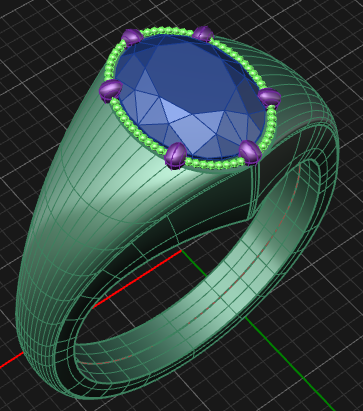
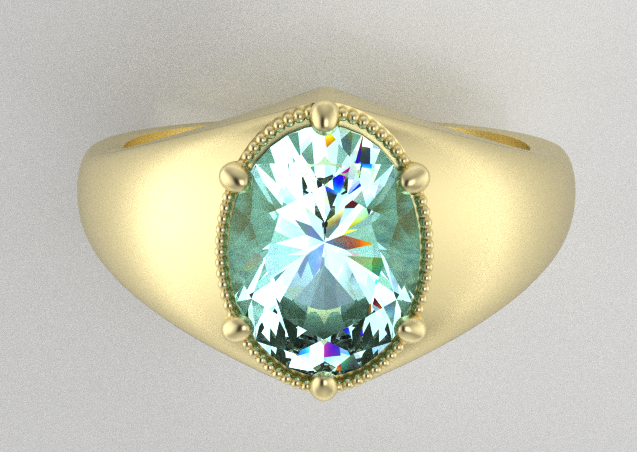
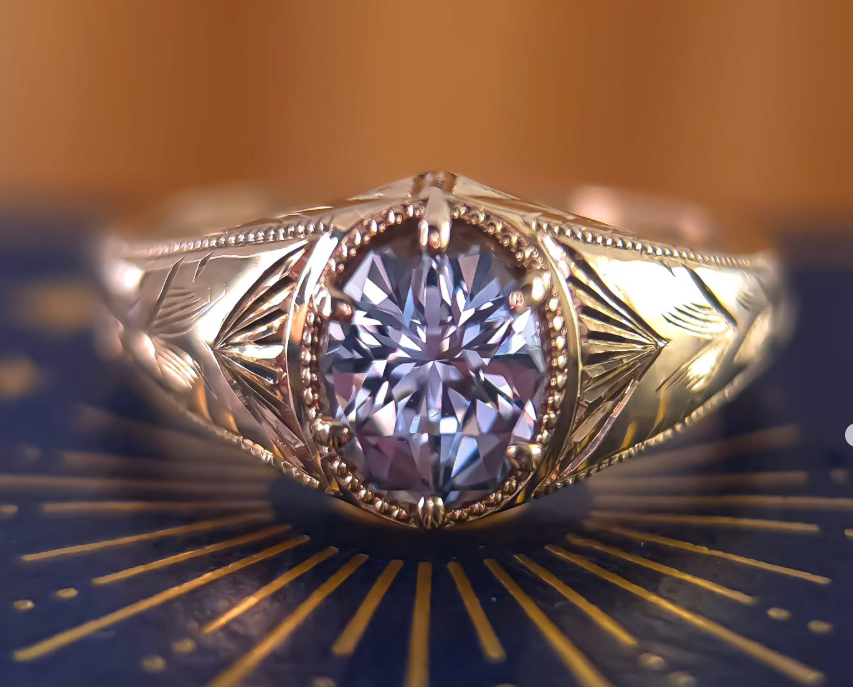
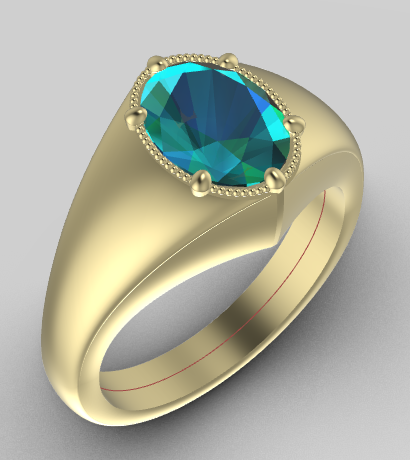
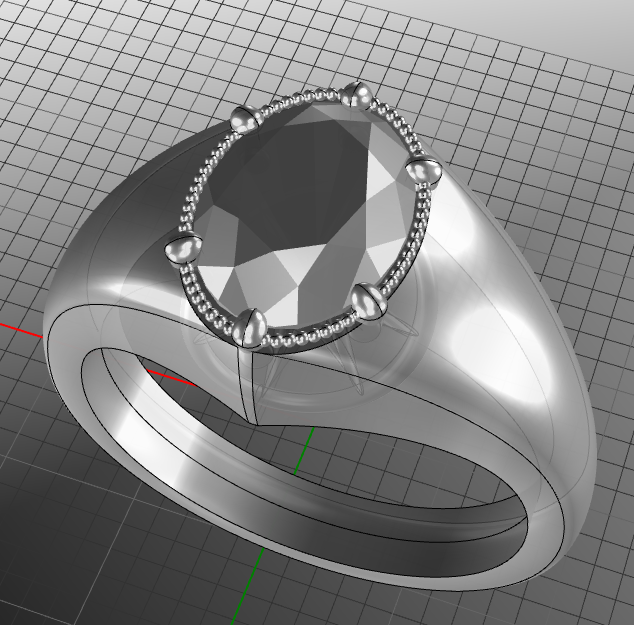
In our example shown here, this ring was an engraved ring I created in 14kt gold for my shop, featuring a beautiful Montana Sapphire cut by Jenna Sloane.
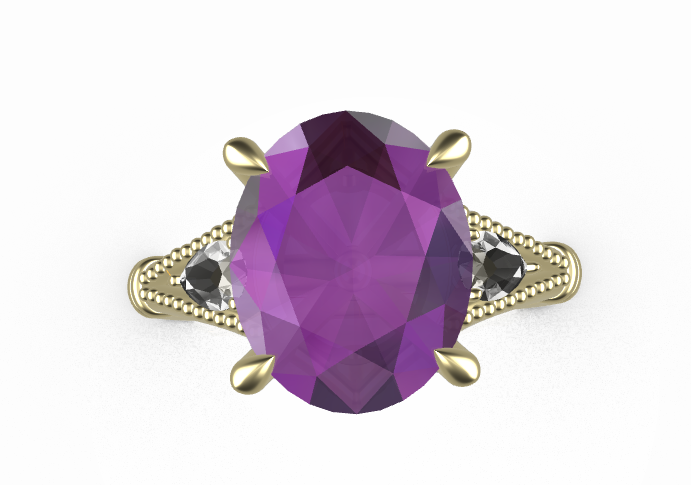
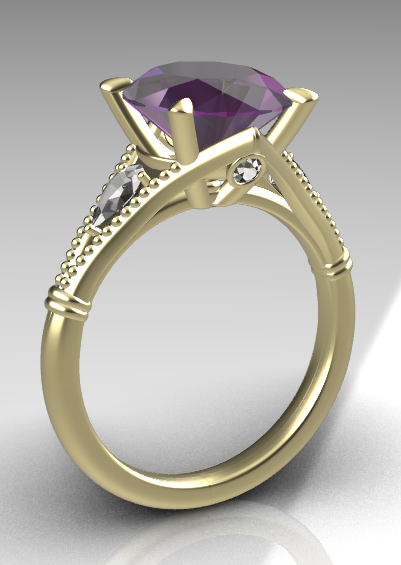
You can see the CAD is quite unappealing, blocky and very thick.

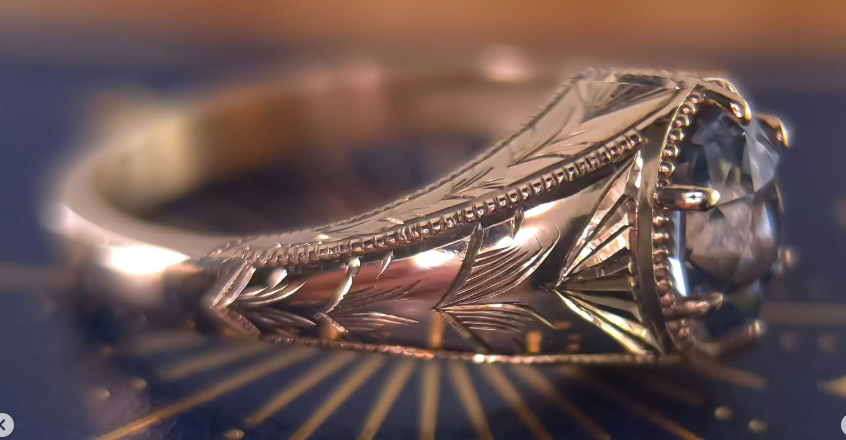
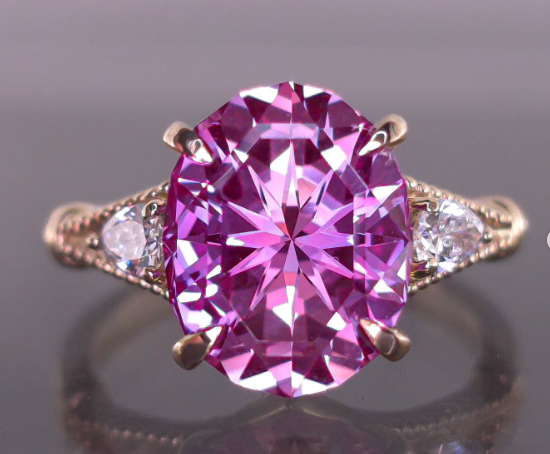
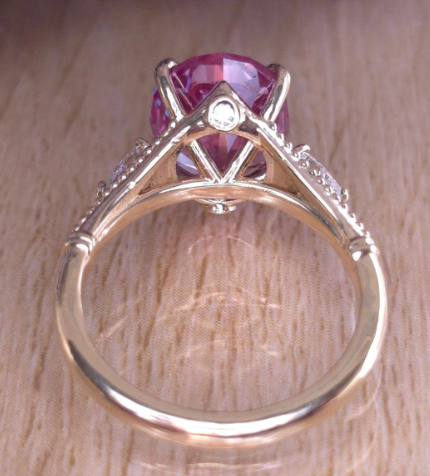
The final piece below is smooth, shiny and sleek - and of course, featured hand engraved leaves and elements done by me.

Since CAD cannot accurately show engraving as its a hand skill, the final product really does look much nicer than the CAD.

Here is another example of how CAD for a clients ring looked and the final product.

As you can see, there is a rather striking difference between the CAD and how the final jewelry turns out!
This is all the magic of hand tools, polishing and sanding that is done with bench tools and lots of time and attention.

I ask clients to consider a few factors before feeling anxious about how CAD looks, and a practical approach to seeing your jewelry come to life.

Great questions to ask yourself are:

- Is my ring design practical for day to day wear?
- Are the accent stones a good size?
- Is my main stone a good size?
- Do I like the arrangement of stones and other elements on my CAD?
- Does my CAD display my vision accurately in terms of proportion and sizing?

Things we cannot change on the CAD:
- How lighting hits my gemstone, accent stones or metal color
- Textures to be more lifelike
- Reflections
-

Dont forget - my clients also get a 3d printed model ring after our three CAD drafts are done BEFORE gold melt - so there is no need for any anxiety. The plastic models are a great way to further confirm the features of your ring, and also proportions before pulling the trigger!

Next
Next

How Custom Jewelry Works